The Personalized
Peptide Care App.
REGEN tracks every vial, every dose, every biomarker, and gives you an AI second opinion before you draw. Built for the people who run their own protocols.
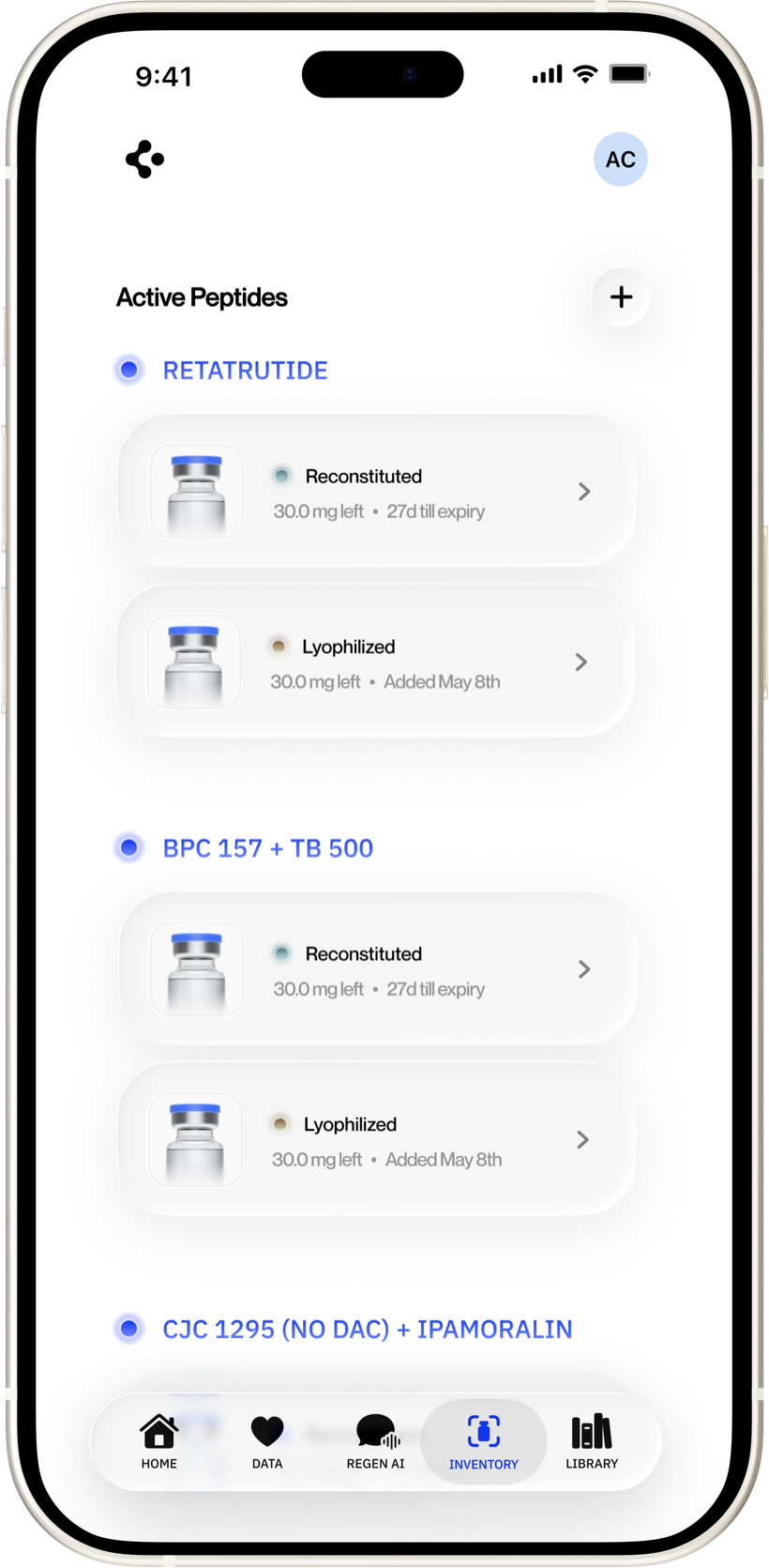
Five tools that replace
the forums and the guesswork.
Every screen pulls from the same protocol. Change a dose once and your schedule, inventory, and biomarker baselines update together.
Your day, dialed.
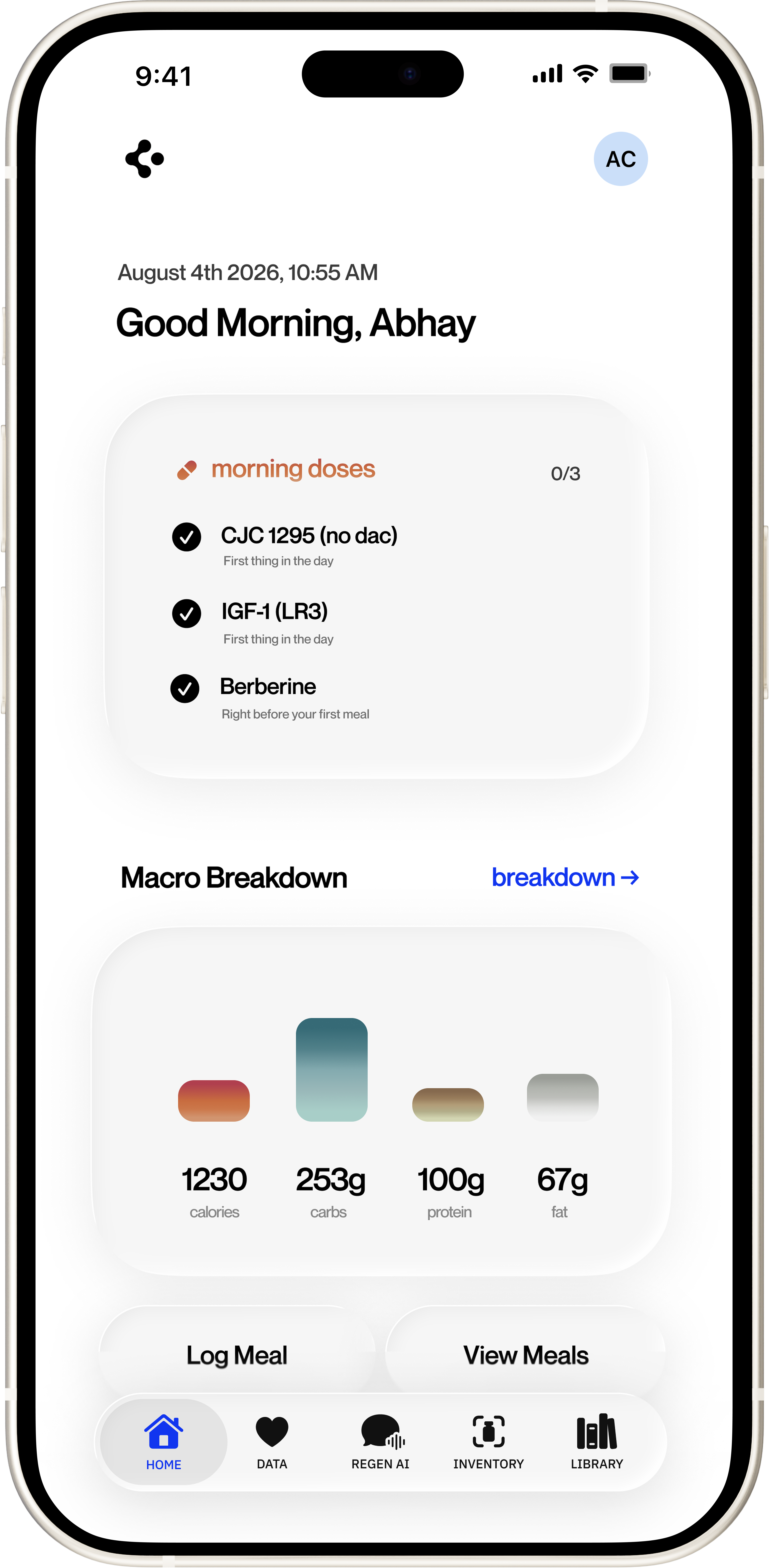
Some doses need an empty stomach, some go with food. REGEN builds the day around each compound's timing rules, not a checklist.
Numbers in, trends out.
Log free testosterone, lipid panels, glucose, sleep. REGEN charts the trend against your protocol, flags drift, and tells you when it's time to retest.
Macros without the spreadsheet.
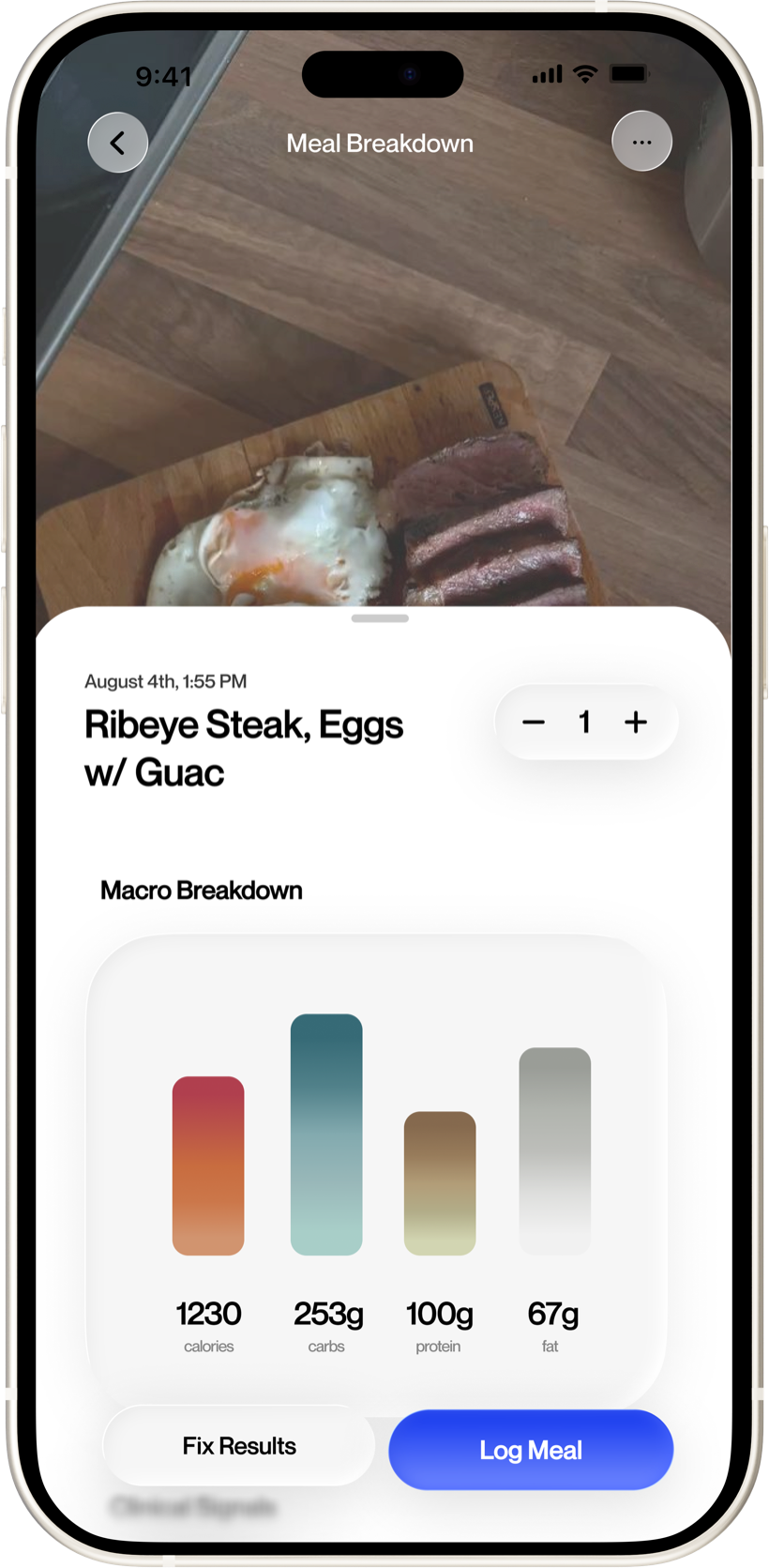
Scan your meal and REGEN scores it against your cycle: calories, protein, carbs, and fat. On a GLP-1, protein matters as much as the dose.
The library behind it all.
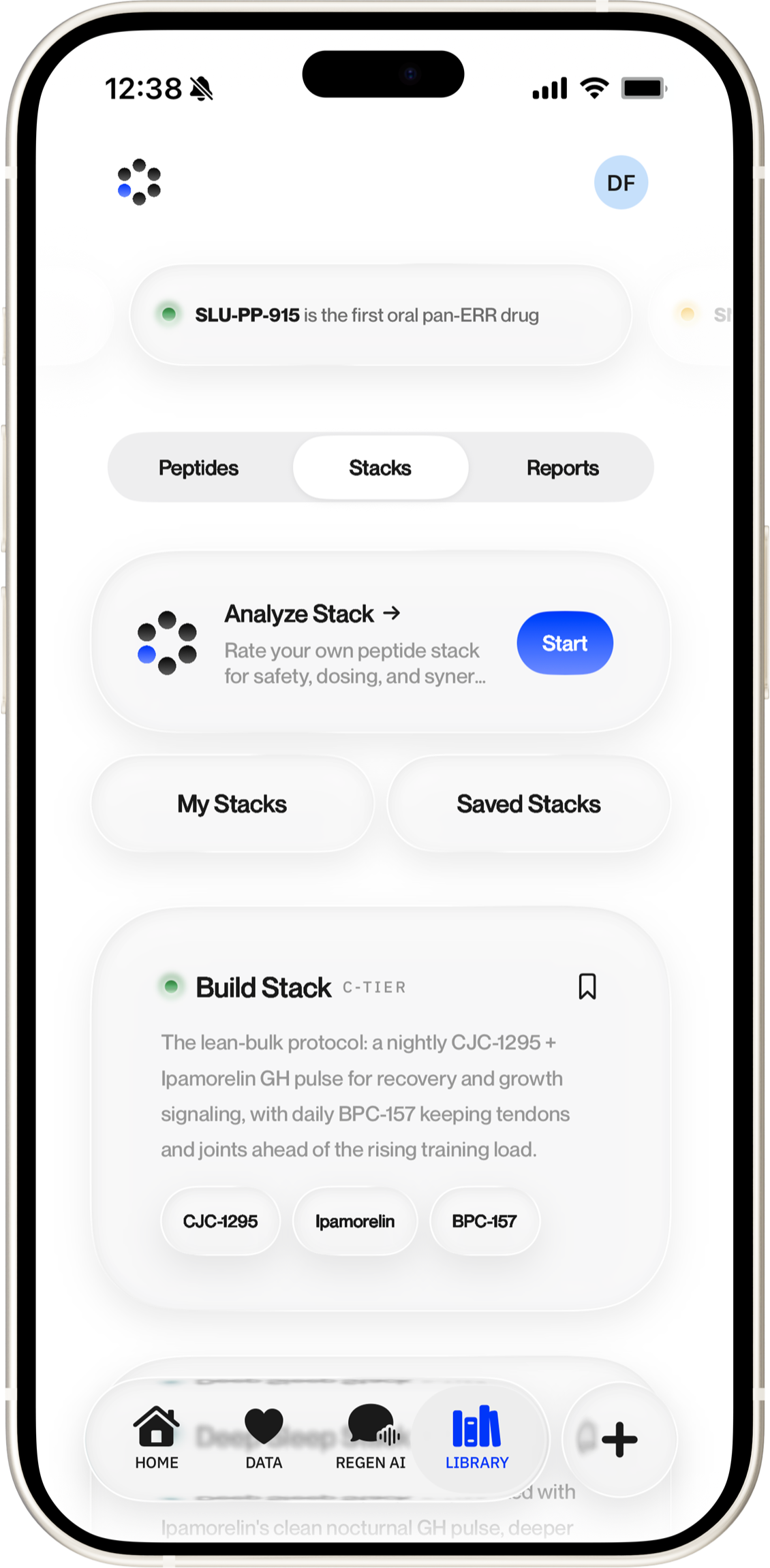
Pick a goal and REGEN narrows it down: fifty-plus peptides and curated stacks, what each compound does, and the guides to run it right.
A second opinion, before you draw.
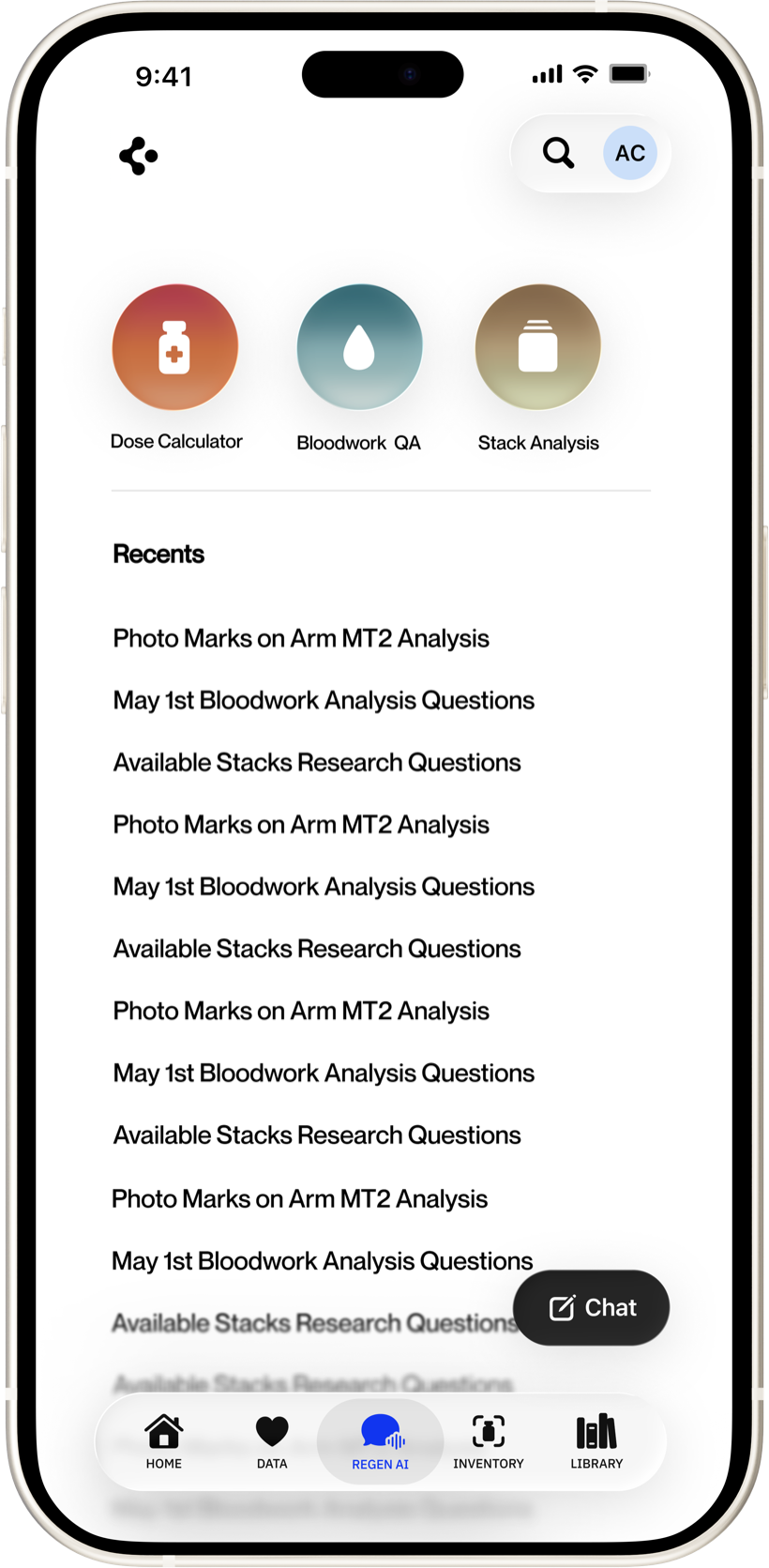
Ask REGEN AI about interactions, half-lives, or what a blood panel means. Every answer cites peer-reviewed research, not forum threads.
What changed
once it was all in one place.
What some of our early users are saying about their experience.
I had three vials going and a notes app that made sense to nobody but me. Putting it in one place was the whole fix, I stopped re-deriving the same math every Sunday just to work out what I was drawing.
The reconstitution calculator caught that my draw didn't fit the syringe I'd picked. I'd have found that out the awkward way.
Uploading old panels and seeing them charted against what I was actually running was the first time any of it connected.
What sold me was the app telling me the evidence behind something I'd already bought was thin. I did not expect the thing I was paying for to argue with me, and I've trusted the rest of it more since.
Logging meals against the dose window changed how I titrated. The pattern was obvious once it was in one view instead of two apps.
It flagged a marker drifting inside its normal range across three panels. Every individual reading was technically fine, so nobody had mentioned it. That's the part I'd never have caught on my own.
Expiry tracking stopped me using a vial I'd reconstituted and completely forgotten about.
Asked it about an interaction and it gave me the citation. I went and read the paper. It was real, and it said what the app said it said.
I stopped guessing what was worth retesting. The app tells me when enough time has passed that a new panel would actually say something different.
I came in wanting one number to go up. I left with a much better sense of which numbers were worth watching at all.
Latest writing.
New articles on dosing, evidence, and bloodwork every week.